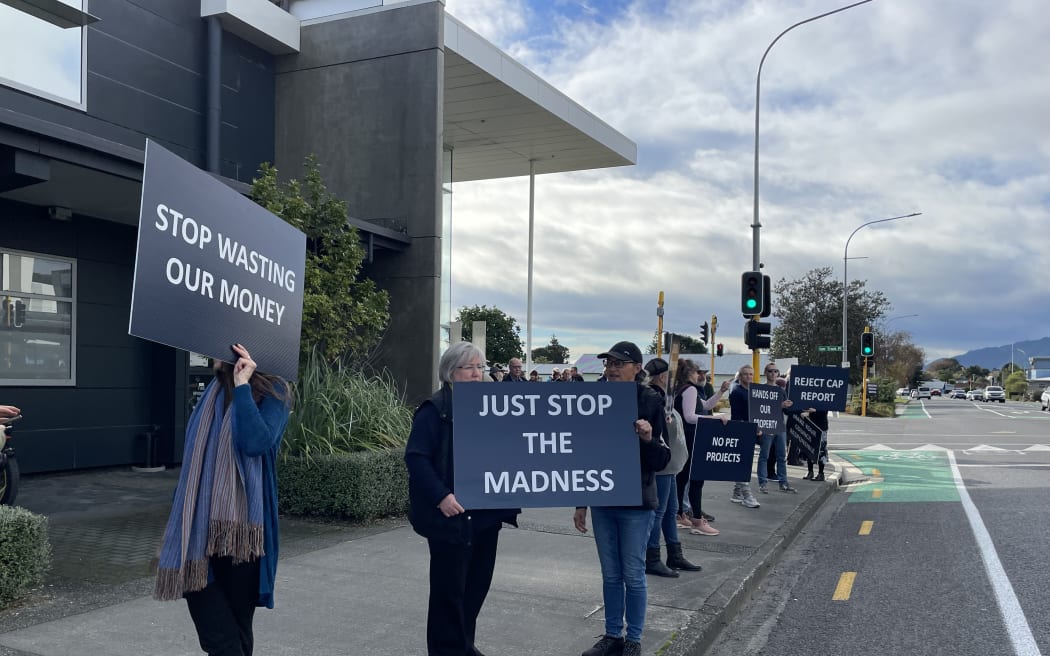
Kapiti Beach residents protested outside the council meeting on Thursday.
Picture: RNZ/Keith Green
Kapiti Beach residents want their local council to produce a report on how to protect hundreds of homes from rising sea levels.
They and the Kapiti Coastal District Council have been at loggerheads for more than a decade over efforts to map out the areas most at risk in the next century.
A group of experts, led by former premier Jim Bolger, held more than 20 community meetings across the region to resolve the issue.
The council first tried to include warnings about erosion in land information notes in 2012, but was twice taken to court by residents, who said the science relied on extreme estimates of sea-level rise and coastal erosion that It is unlikely to happen.
The courts initially supported the council, but a year later, an independent panel found the science lacking and the information was removed.
In 2021, the council looked into the issue and announced a project to map the region and its future risks due to climate change.
On Thursday, protesters outside the council’s offices were met with the honking of their horns in support of passing cars, before heading to a meeting where the report was formally received by the council.
The report itself followed more than a year of work by the panel (known as the Coastal Advisory Panel, or CAP) and presented a range of options for the area’s future, from engineering solutions to outright retreat, which would force people to leave their homes.
The front of mind of some who disagreed was insurance.
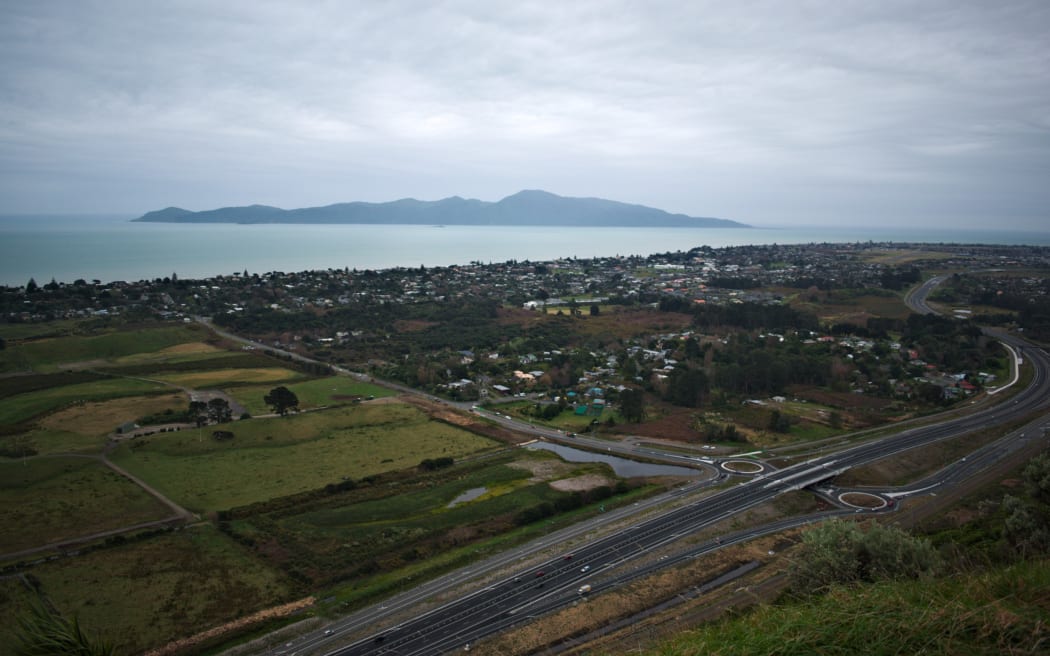
View from Raumati and Paraparaumu to Kāpiti Island.
Picture: 123RF
Tanya Lees of the Kāpiti CALM (Calm Alert Act Madness) group said people were worried that insurance companies would use the report as an excuse to refuse to cover their homes.
“And if insurance companies pull out, that means people can no longer service their mortgages. Banks need a property that’s insured.”
Many still questioned the science behind mapping.
“There are a lot of people, a lot of experts who don’t agree with this,” he said.
“This information appears to have been cherry-picked, perhaps in pursuit of a particular narrative.”
The council said its meetings, held in person and online, received just under 4,000 responses and drew on a range of technical experts, evidence and know-how.
After a meeting in Raumaty, residents raised concerns about Bulger’s alleged aggressive and bullying tactics, and the council sent a letter to residents saying it had spoken to him and reminded him to remain neutral.
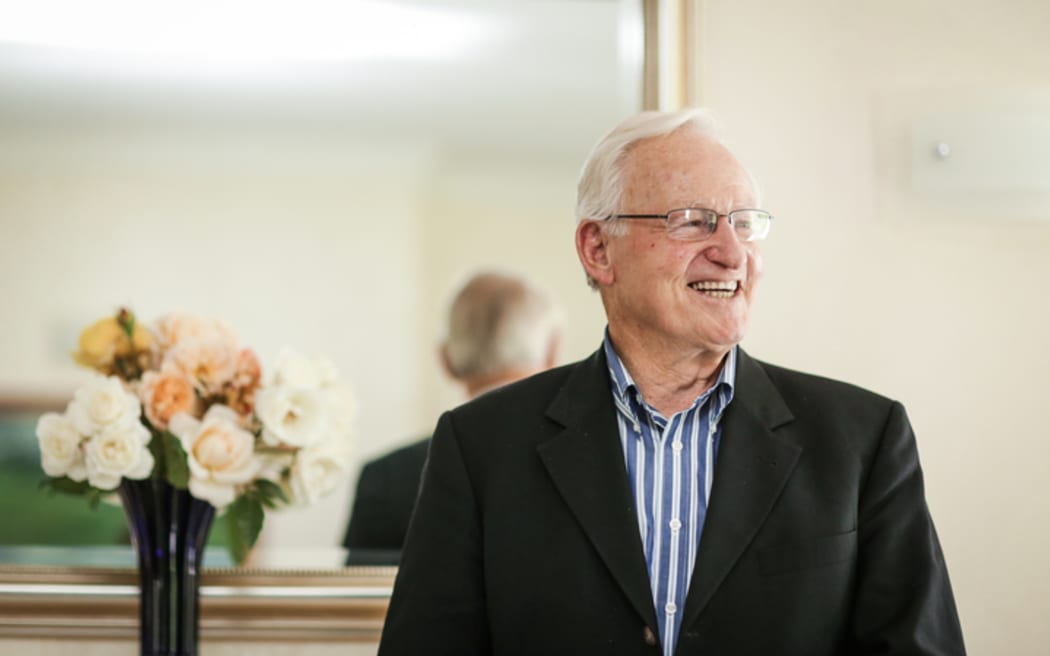
Former Prime Minister Jim Bolger led a series of community meetings on the issue.
Picture: RNZ/Rebekah Parsons-King
Waikanae Beach resident Ian Harrison, who has a background in climate change economics, said it was unnecessary to plan for the worst-case scenario.
You don’t have to understand economics exactly right to know that recommending a managed retreat in this century has a lot of problems.
Harrison had written his own report and was engaging with council officers on his findings as well as an analysis of the council’s latest technical report.
Salima Padamsey of Coastal Ratepayers United said the panel’s report should be seen as advice – nothing more.
The Council never delegated the Advisory Committee to any statutory authority under the Resource Management Act.
“The committee’s mandate does not include providing expert views on policy issues.”
Councilors and council staff went to great lengths after public submissions to make it clear that receipt of the report did not constitute endorsement or conclusion of it as fact.
Officers said they planned to share it with the insurance council, but said they would clarify whether it was used to inform insurance prices. The Council will also make it clear that these findings are not to be taken as confirmed.
When the report was officially received, it marked the end of the project – but Raumati Community Board President Bede Laracy said it was actually the beginning of another.
“We’ve struggled with this a lot in this community,” he said.
We need to do more, not less.
Jason Holland, the district’s director of planning, said at the meeting that the tensions are understandable.
“The higher the stakes, the more intense everyone gets,” he said.
“If you think that your home, which for most people is their biggest asset, is at risk or its value is going down … I understand that the risks are incredibly high.”
The council will consider the report and decide whether to announce any district planning decisions going forward.
#Kapiti #Beach #residents #calling #council #remove #sea #level #rise #report