Beneath the freshwater streams of the world’s largest sand island, an elusive and ancient creature roams the sandy river bed.
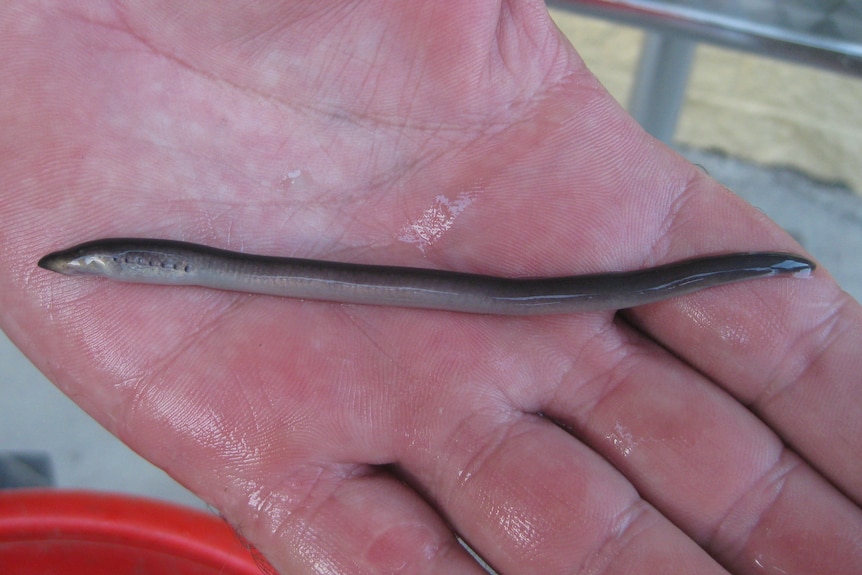
The Australian brook lamprey is a surprising discovery in Queensland waterways, and researchers previously believed the unique fish species only lived in cool climates.
Griffith University ecologist Luke Carpenter Bundhu returned to Kgari (Fraser Island), a World Heritage-listed island, and encountered the species in 2022.
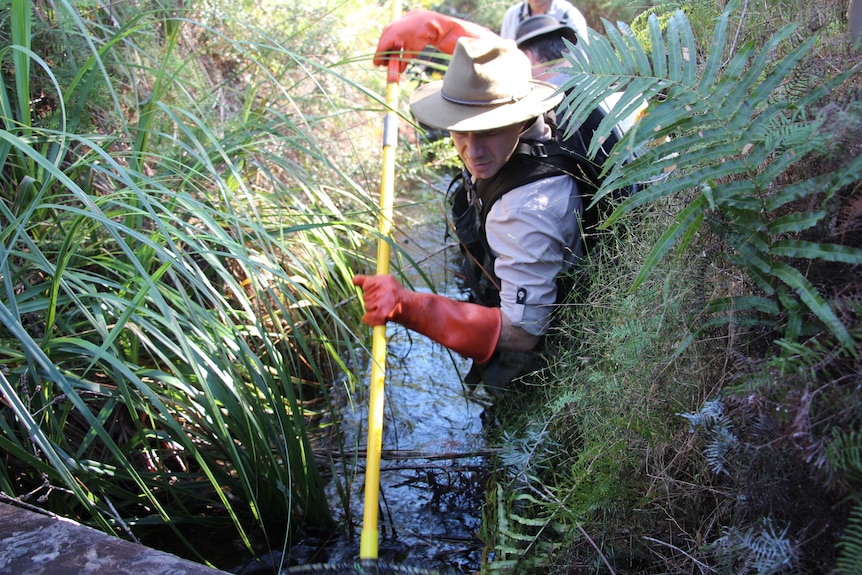
“At first glance I thought, ‘Oh, little eel,'” said Dr. Carpenter Bundhu.
“[Then I realised] It’s not an eel, it’s a lamprey. What is he doing here?”
The species was first identified in two rivers on the south coast of New South Wales in the 1960s but is now thought to be extirpated from that area.
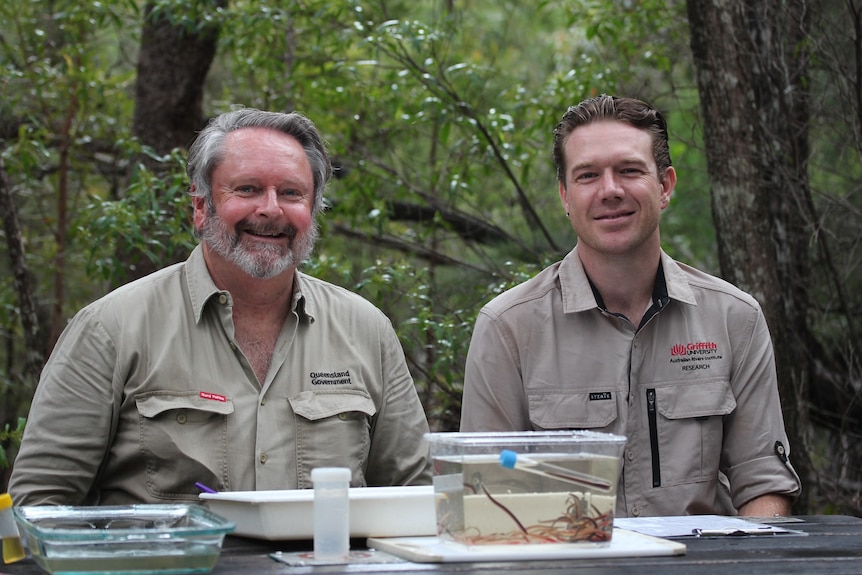
After finding it 1,500 kilometers from Queensland, Dr Carpenter-Bundo worked with scientist David Moffat to investigate other potential sites in the state.
The couple’s research – that confirmed premature bite Populations also on the Sunshine Coast and near Rockhampton – published in the Journal of Endangered Species Research in April.
“They were such an unusual find in this part of the world that we had a hard time convincing the experts that they were real. [a] David Moffat, principal scientist at Queensland’s Department of Environment, Science and Innovation, said: “Residents … and not just the occurrence of people swimming from down south.”
not a “vampire fish”
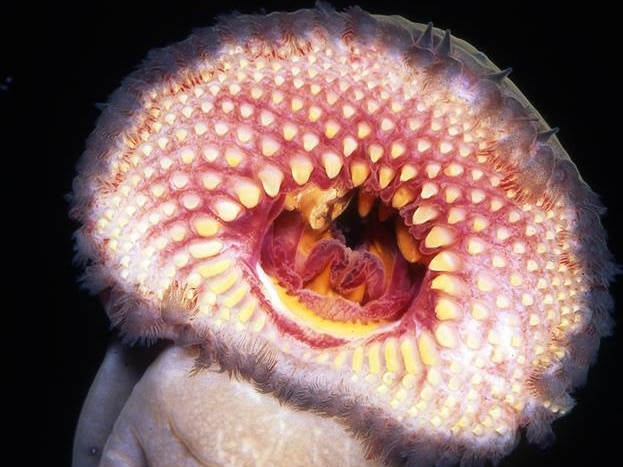
The distinctive feature of the lamprey is that it does not have a jawbone, but grows hundreds of teeth.
Mr Moffat said the 14cm fish spent around six years buried in sand and fed as larvae before developing fins, eyes and teeth.
“They have this suction disc and around it there are countless tiny, tiny teeth that are used to create a seal and suck the animal out in a parasitic way,” Mr Moffat said.
“The non-parasitic version [Australian brook] It has exactly the same teeth, but it never feeds.”
It is far from other species of lamprey such as the sea lamprey in the Atlantic Ocean which can grow up to 1.2 meters and kills 18 kilograms of fish annually.
Dr Carpenter Bundhu said: “Lampreys, all over the world, are generally parasitic.
They are also known as vampire fish.
“These [Australian brook] Lampreys dispense with the term parasitic feeding – they are the vegan Dracula of lampreys.
“The Importance of Human Medicine”
Dr Carpenter-Bundhoo said the discovery of “the world’s first truly tropical lamprey” bodes well for the future of the species.
“At temperatures above 28C, there’s something in the lamprey’s body that starts to break down – it was thought to be that,” he said.
“If global temperatures rise, species that are resistant to these higher temperatures may be slightly more resilient to climate change.”
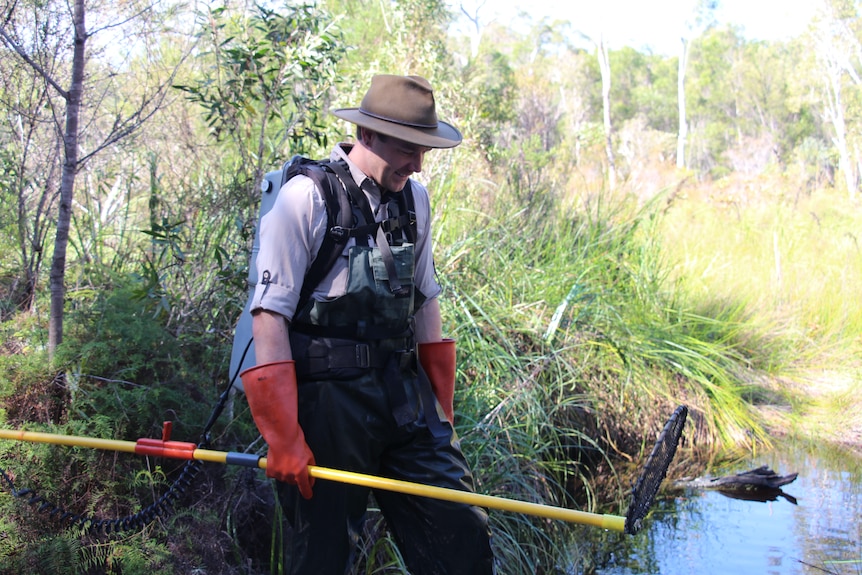
Dr. Carpenter-Bundhoo said the species is also valuable for developmental research.
“Because they’re so old, they have a really well-known neural network,” he said.
“If you can discover something in the brain of a lamprey … it really helps to discover something in the brains of more complex organisms like humans.”
Mr Moffat added that the species had “a little bit of importance for human medicine”, including providing insight into treatment options for babies with jaundice.
He explained that in an adult Australian brook lamprey, the digestive system and liver break down – a process known as biliary atresia.
“By understanding what happens in lampreys, what turns on this process of biliary atresia in their genes … we might be able to find a solution for babies who haven’t yet turned on their liver processes,” Mr Moffat said.
“Australian researchers will have the opportunity to look at these animals. [and] “Even if they are protected, there is still the potential to take a small number of people for research.”
Meanwhile, Dr. Carpenter-Bundo said she was still coming to terms with the magnitude of the finding.
“As a modern ecologist, you operate under the simple assumption that everything has already been discovered,” he said.
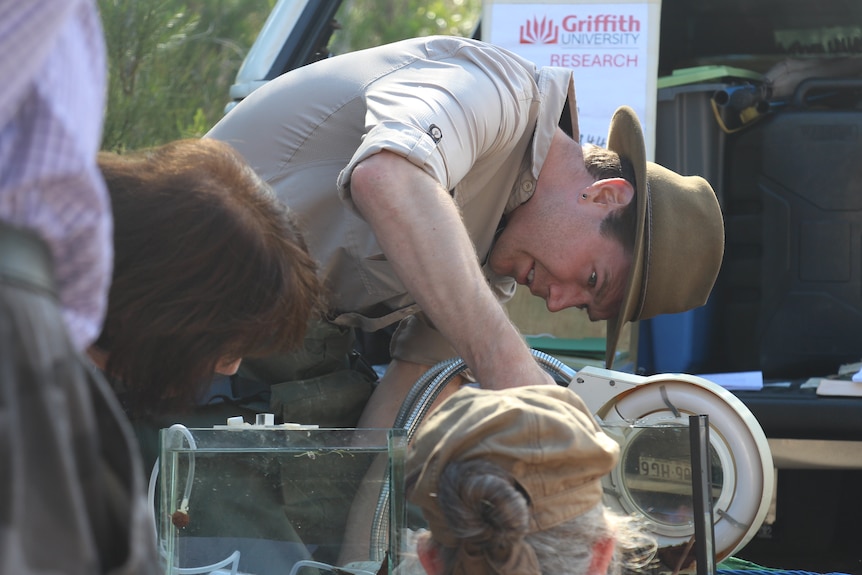
“It kind of harkens back to a time when people were discovering things all over the place.
It’s very rare today to be able to do that, so I feel very privileged and very lucky to be able to do that.
The study was funded by the National Environmental Science Program’s Center for Resilient Landscapes, which hopes to provide more research in this area in the future.
Get our local newsletter delivered free every Thursday
Posted , updated
#Vegan #Dracula #fish #excites #scientists #discovered #Queensland #waterways